Behind the Bar and In Charge: How Women Are Transforming the Business of Going Out
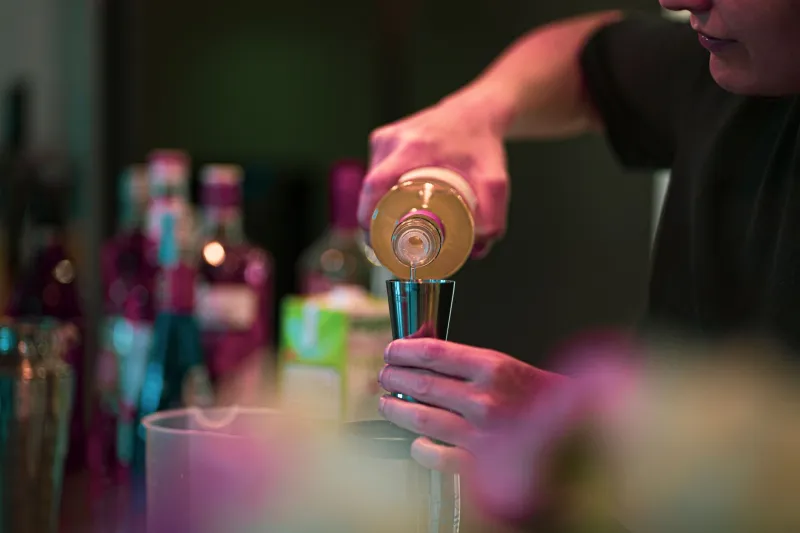
Walk into Clover Social in Nashville on a Friday night and the first thing you notice is the light—warm, flattering, intentional. The second thing you notice is that the bartender isn't performing. She's just working: precise, unhurried, genuinely present. There's no flair for its own sake, no theatrical pour designed to get a tip. Just craft, executed cleanly.
Clover Social is owned by Dominique Hale, who spent twelve years bartending in spaces that weren't built for her before she built one of her own. The bar has been open for two years. It has a waiting list on weekends.
"I knew exactly what I didn't want," Hale says. "Because I'd worked in all of it."
She's not alone. Across the US, women are moving into ownership and leadership roles in the bar industry at a rate that's quietly reshaping what a night out looks, feels, and operates like. This isn't a trend piece about representation for its own sake. It's about what actually changes when the people running bars have different experiences, different priorities, and different ideas about what hospitality should feel like.
The Landscape Has Changed—Slowly, Then Fast
For most of American bar history, the industry was structured in ways that made advancement difficult for women. Ownership required capital that was harder to access. Head bartender roles went to men by default. The culture of many bar environments—late nights, aggressive banter, a tolerance for bad behavior from customers and colleagues alike—functioned as an informal filter that pushed women out or kept them in support roles.
That structure hasn't disappeared. But it's cracking.
The James Beard Foundation's Outstanding Bar Program, one of the industry's most visible recognitions, has seen a significant uptick in female-led nominees and winners in recent years. Organizations like Speed Rack, a national bartending competition exclusively for women, have created visibility pipelines that didn't exist a decade ago. And the pandemic, which devastated the industry broadly, also created openings—literally and figuratively—for people who were previously locked out of ownership opportunities.
"A lot of leases became available. A lot of investors became more open-minded," says Priya Anand, who opened a cocktail bar in Seattle's Capitol Hill neighborhood in 2022. "I'd been trying to get backing for years. Suddenly, the timing worked."
Anand's bar, Dusk & Gilt, is now one of the highest-rated cocktail spots in the city on every major review platform. She attributes much of that to the experience of having worked in places that got things wrong.
Different Priorities, Different Rooms
Ask female bar owners what they do differently, and the answers cluster around a few consistent themes: safety, staff culture, and menu intentionality.
On safety: bars run by women tend to invest more deliberately in policies and physical design that reduce the likelihood of harassment. Better lighting. Clear sight lines. Staff trained to intervene, not just observe. Explicit policies posted where customers can see them.
"It's not that I think men don't care about this," says Anand. "It's that I've personally experienced what it feels like to be unsafe in a bar. That makes it a different kind of priority."
In Chicago, Marisol Vega runs a two-year-old bar in Logan Square that has become known—partly by reputation, partly by word of mouth in group chats—as a place where you don't have to worry. "Women tell me they bring their friends here specifically because they feel comfortable," she says. "That's the best review I've ever gotten."
The staff culture piece is equally significant. Female-owned bars tend to report lower turnover, more equitable tip structures, and clearer communication about expectations. That's not a universal rule, but it's a pattern that comes up consistently in conversations with bartenders who've worked in both environments.
"I've worked for men who were great and women who were difficult," says Marcus Webb, a bartender at a female-owned bar in Atlanta. "But the best-run place I've ever worked is here. And I think a lot of that comes from the owner having been in our exact position and knowing what it's like."
The Menu Is Different Too
This is where things get interesting from a purely drinks perspective. Female bartenders and owners are, on average, pushing menus in directions that the industry's old guard would have considered commercially risky.
More low-ABV options. More zero-proof cocktails treated as serious offerings rather than afterthoughts. More flavor profiles that move away from the spirit-forward, booze-as-endurance ethos that dominated cocktail culture for years. More transparency about ingredients and sourcing.
"I got tired of menus that seemed designed to impress other bartenders," says Hale at Clover Social. "I wanted to make things that people actually wanted to drink, that made them feel good, that they'd remember for the right reasons."
The commercial results back this up. Bars that have diversified their menus to include genuine low-proof and non-alcoholic options are capturing a demographic—particularly younger women—that was previously underserved by nightlife venues.
What the Industry Still Gets Wrong
None of this means the work is done. Women in the bar industry still face funding gaps, credibility gaps, and the particular exhaustion of having to prove their expertise in spaces where it's assumed of their male counterparts. Female bar owners frequently report being mistaken for servers or hostesses in their own establishments. Bartenders describe being quizzed by customers in ways their male colleagues aren't.
"The expertise is assumed for them and has to be demonstrated by us," says Anand. "Every shift. It gets old."
Industry organizations, distributor relationships, and the press—including nightlife coverage—still skew toward male voices and male-owned venues as the default. Changing that requires deliberate choices from everyone in the ecosystem, not just the people who are already doing the work.
The Room Feels Different
Here's the simplest way to put it: bars run by women often feel different to be in. Not universally. Not because of some essential quality. But because the people building them have thought carefully about what they didn't like, what they wished existed, and what it would take to make a room where everyone felt like a welcome guest.
That's good hospitality. And good hospitality, it turns out, is good business.
Next time you're looking for somewhere to go, pay attention to who's behind the bar and whose name is on the lease. You might find that the best night you've had in a while was made possible by someone who had to fight a little harder to make it happen.