Why the Best Bars in America Are Firing the Algorithm and Hiring a DJ
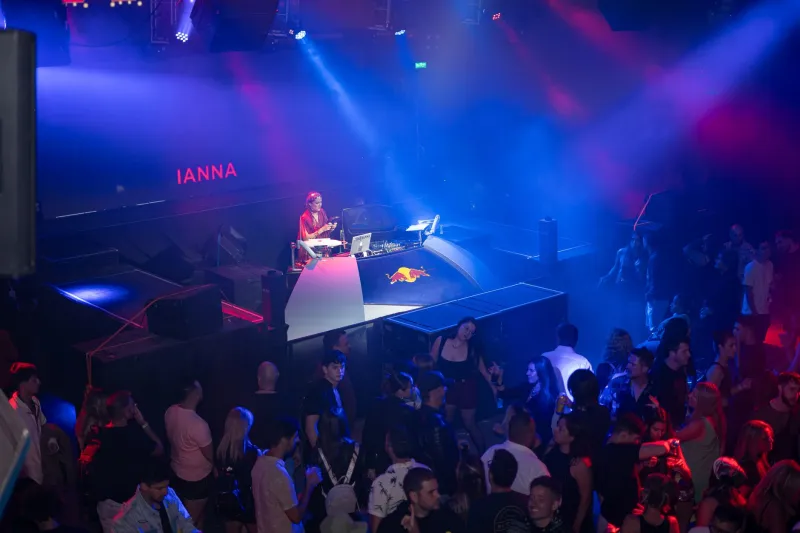
Let me describe a feeling you've probably had without ever putting words to it. You walk into a bar on a Friday night. The place looks good — nice lighting, solid crowd, the kind of menu that clearly had some thought put into it. But something's off. The music is technically fine. Inoffensive. Competent. It fills the room without ever quite landing in it. You stay for two drinks and leave, and you're not entirely sure why.
There's a decent chance the culprit was the playlist.
Over the last decade, algorithmic and streaming-based music became the default for a massive swath of bars and venues across the US. Spotify for Business, curated playlist services, AI-generated ambient tracks — they were cheap, easy, legally licensed, and perfectly adequate. They were also, in a way that's hard to quantify but easy to experience, kind of dead.
Now a growing number of venues are pushing back, and the conversation around music as a core component of venue identity is getting louder.
What a Playlist Can't Do
Algorithms are genuinely good at certain things. They can maintain a consistent tempo. They can avoid playing something wildly off-genre. They can transition smoothly and they never show up late or ask for more money.
What they can't do is read a room.
A skilled DJ — or even a thoughtfully curated human selector working from a physical booth — is constantly processing information that no algorithm has access to. The crowd's age skew on a given night. Whether people are dancing or talking. The energy spike when a certain song drops and the moment to follow it with something that keeps that feeling alive rather than interrupting it. The ability to take a risk on something unexpected and pull it off.
That responsiveness is what creates a musical atmosphere rather than a musical backdrop. And the difference between the two is the difference between a room that feels alive and one that just has sound in it.
Sonic Branding Is a Real Thing
Here's an angle that the business-minded venue operators are paying attention to: music is one of the most powerful tools a bar has to build a distinct identity, and outsourcing it to an algorithm is essentially opting out of that tool.
Think about the bars and clubs you actually remember. The ones you'd recommend to a friend. Chances are, you have some sonic memory attached to each of them — not necessarily a specific song, but a feeling. A genre blend that felt particular to that space. A DJ whose style you recognized. A sound that made you feel like you were somewhere, not just anywhere.
That's what venues are trying to recapture. In a market where bars are competing for the same pool of customers who have dozens of options on any given night, differentiation is survival. And music, done with intention, is one of the most effective differentiators available.
Some venues are going as far as hiring music directors — not DJs, but people whose job is to develop and protect the sonic identity of the space across every night of the week, whether there's a live DJ or not. The playlist, if there is one, is curated by a human who understands the brand.
The Live DJ Comeback
Live DJs never fully disappeared, of course. The big clubs kept them. But for mid-tier bars and neighborhood spots, the economics made streaming look attractive. Why pay a DJ $300 on a Tuesday when the playlist costs $25 a month?
The math is getting reexamined. Bars that have brought back live selectors — even for just a few nights a week — are reporting that the presence of a DJ changes the energy in ways that show up in the numbers. Longer dwell times. Higher per-head spend. More repeat visits from customers who came specifically because they knew who was playing.
There's also a community-building dimension that's hard to put a dollar figure on. A DJ who plays a venue regularly becomes a node in a social network — they bring their followers, their collaborators, their scene. The bar becomes a hub rather than just a location.
In cities like Brooklyn, LA, Chicago, and Houston, you can already see this playing out. Some of the most talked-about bars right now aren't the ones with the best cocktail menus or the most Instagram-friendly interiors. They're the ones where the music is genuinely good and genuinely theirs.
The Authenticity Argument
There's a cultural argument here that goes beyond business strategy, and it's worth making plainly: people can feel the difference between music that was chosen for them and music that was generated for a demographic profile.
Algorithms optimize for averages. They find the center of a data set and play to it. That's useful if you want to avoid alienating anyone. It's useless if you want to excite someone.
The venues reclaiming music control are betting that excitement — the feeling that you're in a room where someone made a choice, took a swing, created something specific — is worth more than inoffensive adequacy. And given what we're seeing in the markets where this shift is furthest along, that bet is looking pretty good.
Your local bar doesn't need a world-class DJ residency to get this right. It just needs someone who gives a damn about what's playing and why. That's not a high bar. It's just a bar that actually sounds like itself.
And right now, that's enough to stand out.