Rope Drops, Open Floors: Why Clubs Are Killing the VIP Cage

There's a certain kind of nightlife memory that a lot of us share — standing on the wrong side of a velvet rope, watching a half-empty booth collect bottle service that nobody ordered because they actually wanted it. The VIP section was never really about luxury. It was about visibility. About being seen being separated from everyone else.
That game is getting old fast.
Across major US cities, from Austin to Atlanta to the neighborhoods of Chicago that actually stay lit past midnight, a growing number of bars and clubs are quietly dismantling their tiered layouts. No more roped-off mezzanines. No more bottle-service fortresses with their own security guards. Just one room, one vibe, and a whole lot more energy.
The Architecture of Exclusion
The VIP section made sense in a particular cultural moment — the mid-2000s through the early 2010s, when aspirational nightlife was built on spectacle. You wanted people to see you spending. The section wasn't just seating; it was a stage.
But something shifted. Social media democratized the flex. You don't need a reserved booth to signal status anymore — your Instagram is doing that work 24/7. And for a generation of drinkers who grew up watching influencers project curated perfection from their phones, the in-person performance of exclusivity feels, frankly, exhausting.
"Gen Z isn't impressed by the idea of a velvet rope," says one Chicago venue manager who recently converted his club's VIP mezzanine into open communal seating. "They're more likely to post a bad review about feeling unwelcome than they are to aspire to the section they couldn't get into."
That FOMO-to-resentment pipeline is something venues are increasingly aware of. The old model assumed that people on the outside of a VIP area would spend more trying to get in. The new data suggests the opposite — they leave.
What Open-Floor Design Actually Looks Like
Removing a VIP section isn't just pulling down a velvet rope. The venues doing this well are rethinking the entire spatial experience.
Some are replacing tiered seating with elevated communal tables — still offering a slightly different vantage point, but accessible to anyone who shows up early or grabs a spot. Others are building what designers are calling "flow zones" — areas where the crowd naturally moves and mingles rather than settles into static territorial camps.
The bar itself often becomes the new center of gravity. Instead of a back-corner VIP booth being the aspirational destination, the bar rail becomes the place to be seen, which is great news for venues — it's also where most of the spending happens.
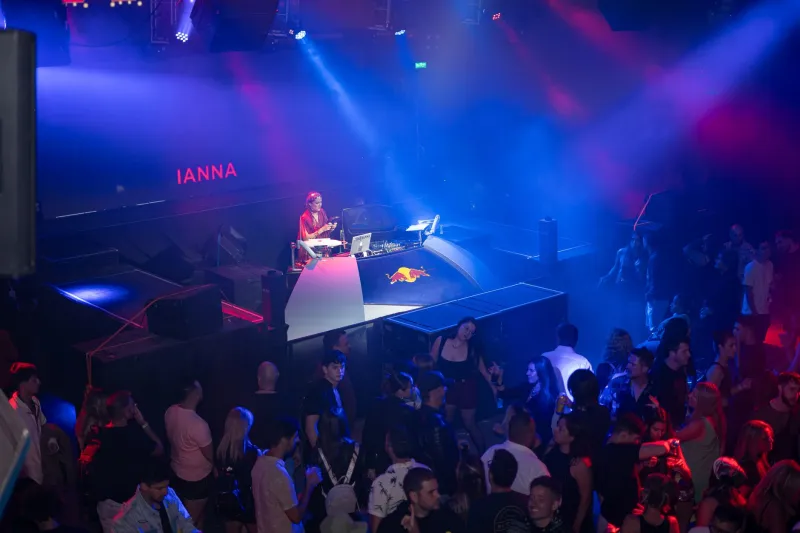
A few spots in Nashville and Denver have gone even further, eliminating reserved seating altogether on weekend nights. Walk in, find your people, claim your corner. The energy, by most accounts, is noticeably different — less performative, more genuinely social.
The Profitability Surprise
Here's the part that might raise some eyebrows: venues that have made this switch aren't reporting revenue losses. Several are seeing the opposite.
The VIP model was always a high-variance bet. A big table buyout on a Saturday could look great on paper, but it also meant blocking off floor space for a group that might not arrive until midnight and might clear out by 1 AM. Meanwhile, the general crowd — the people actually dancing, ordering rounds, and staying until last call — was getting squeezed into whatever space was left.
Open-floor layouts tend to increase throughput. More people can occupy the same square footage comfortably when there aren't artificial barriers. And a denser, more energized crowd is its own advertisement — the kind that makes people walking past the window decide to come in.
There's also a staffing angle. Maintaining a VIP section requires dedicated servers, security, and a whole logistics layer that eats into margins. Simplify the floor plan and you simplify the operation.
The Social Dynamics Shift
Beyond the business case, there's something genuinely different about the vibe in these reconfigured spaces. Regulars at venues that have made the switch describe the atmosphere as less tense, more spontaneous.
When there's no hierarchy baked into the room's architecture, strangers actually talk to each other more. The weird territorial energy that used to define big-city nightlife — where you'd spend half the night defending your table from encroachment — dissolves when everyone's working with the same floor.
That's not nothing. A huge part of why people go out is to connect with other people. Anything that actively impedes that — including a physical cage separating the "important" guests from everyone else — is working against the whole point.
Is the VIP Section Really Dead?
Not everywhere, and probably not forever. Ultra-high-end venues with clientele who genuinely want privacy and seclusion will always have a market. And plenty of clubs in Las Vegas or Miami are still doing the full bottle-service theater, and doing it well.
But as a default model for mid-tier nightlife venues trying to build loyal, younger crowds? The tiered layout is losing ground fast. The venues winning right now are the ones that figured out that making everyone feel welcome isn't just a nice value to have — it's a competitive advantage.
The velvet rope kept people out. Turns out, keeping people in is a much better business strategy.